BUDDHISM IN CHINA / CHAN

The way of Chan.

Begin with a flower and a smile. Follow the remembered teachers from India to China, then explore the temples and mountains that carry their stories.

Begin at the beginning ↓
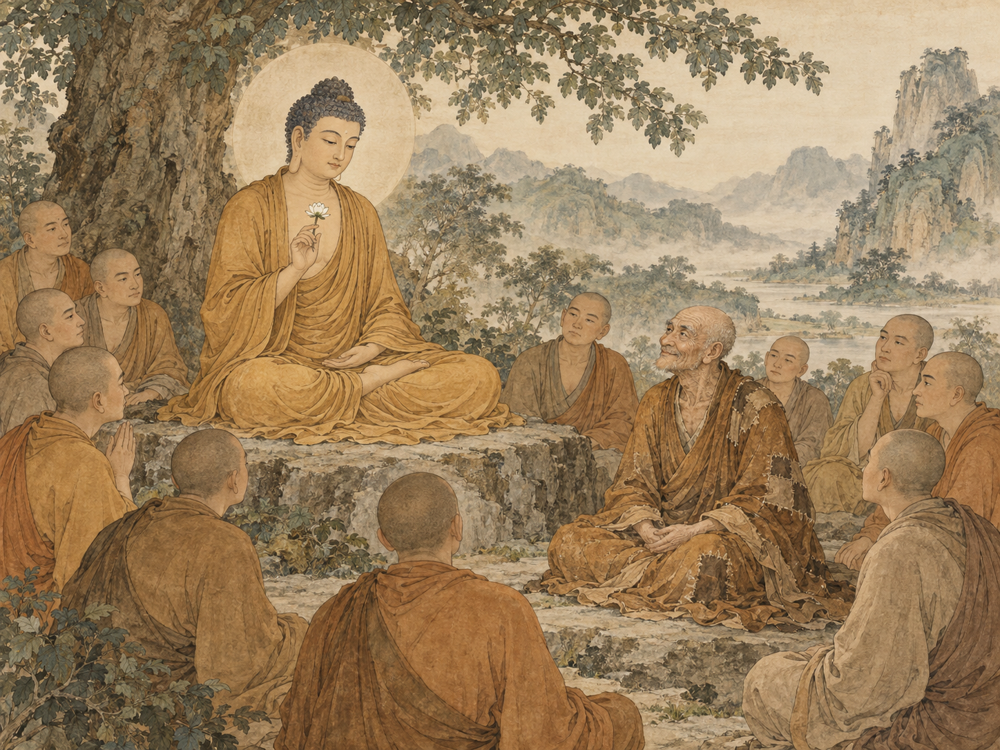
The Buddha raises a flower; Mahākāśyapa smiles among the listening monastic assembly at Vulture Peak
Contemporary illustration of the Flower Sermon at Vulture Peak.

A flower. A smile.

At Vulture Peak in India, the Buddha raises a flower before the assembly and says nothing. Everyone remains silent. Mahākāśyapa smiles.

According to Chan tradition, the Buddha recognises this wordless understanding and entrusts the teaching to him. Known as the Flower Sermon, or 拈花微笑, the story places Mahākāśyapa at the beginning of the Indian patriarchal lineage: an understanding passed from mind to mind.

That remembered succession runs through twenty-eight patriarchs to Bodhidharma, who is also the first patriarch of Chan in China. It is a sacred genealogy preserved in later Chan literature, rather than a continuous historical record of dated meetings.

On Jizu Shan, local Buddhist belief places Mahākāśyapa at Huashou Gate, safeguarding the Buddha’s robe while awaiting Maitreya. The mountain offers a living landscape through which to explore this wider story.

Explore Jizu Shan & Huashou Gate ↗

Twenty-eight Indian patriarchs.

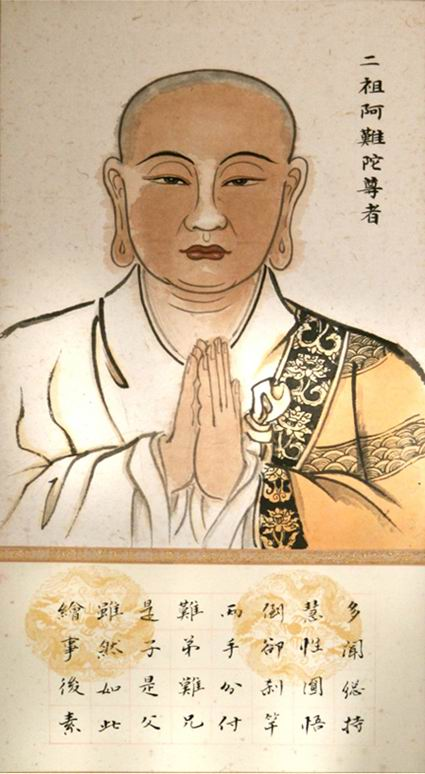
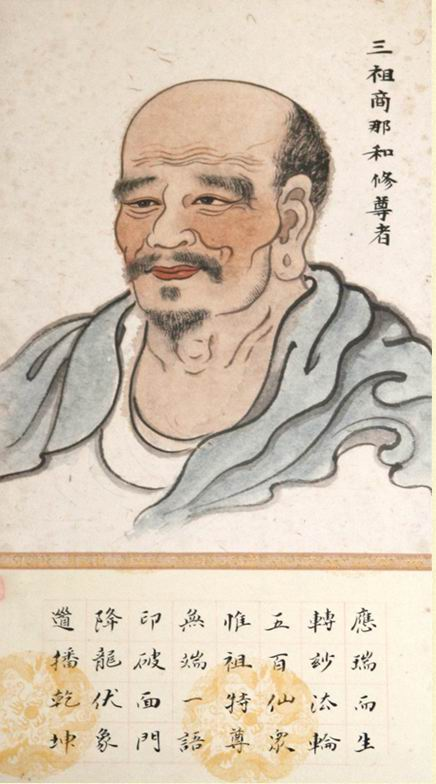
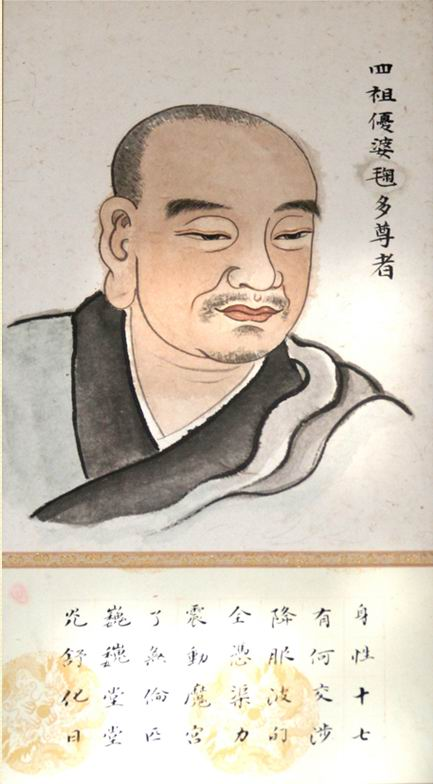
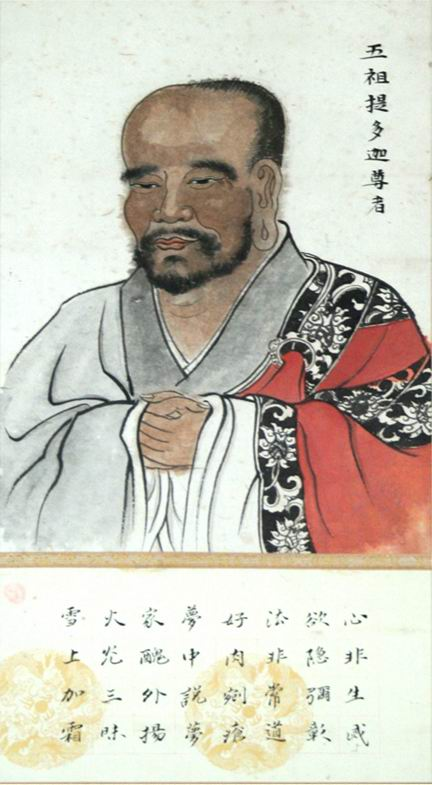
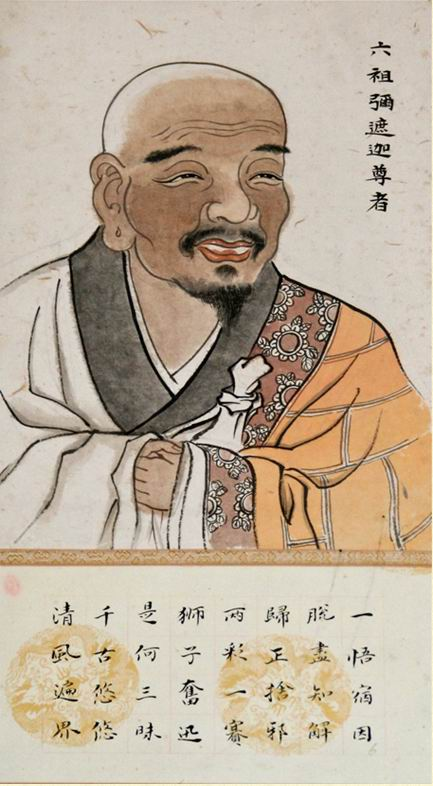
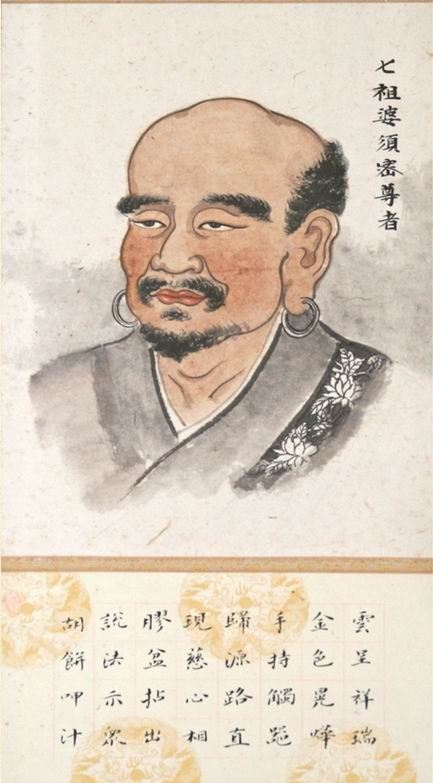
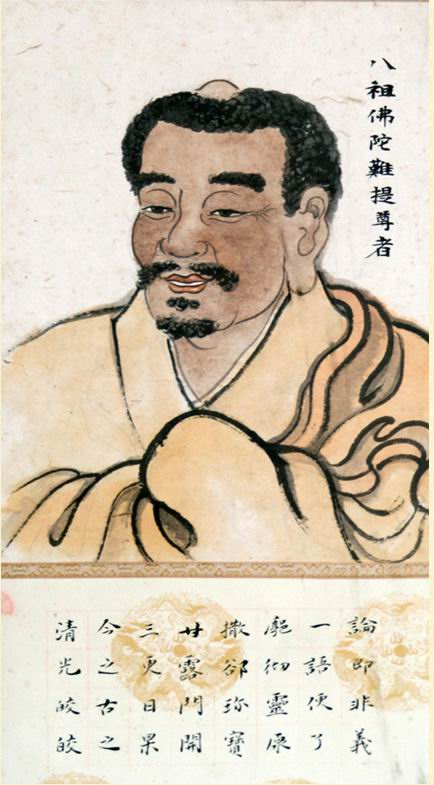
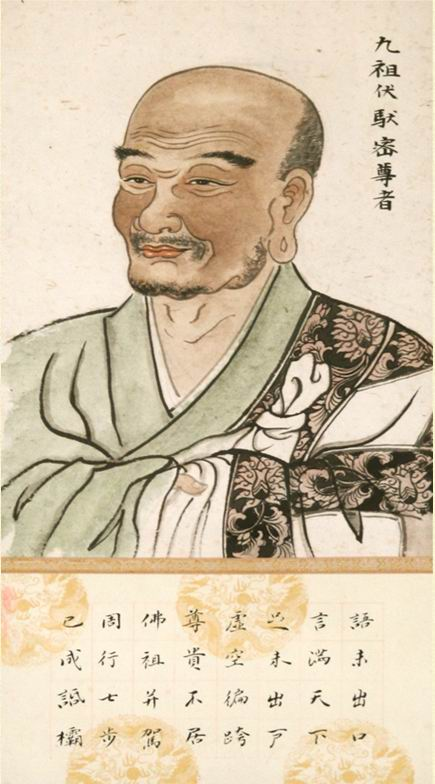
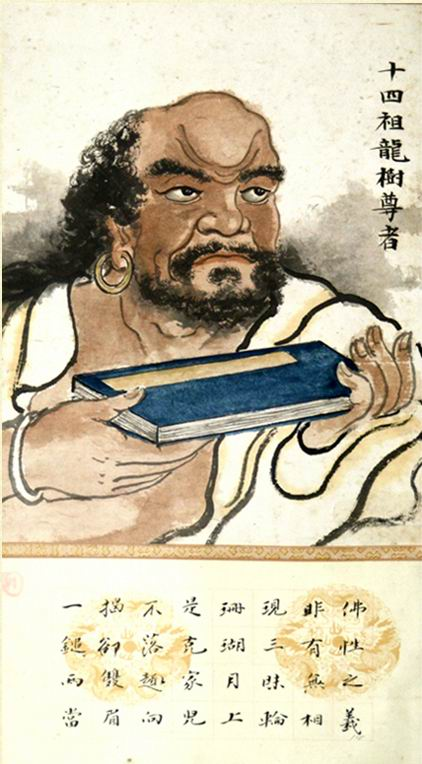
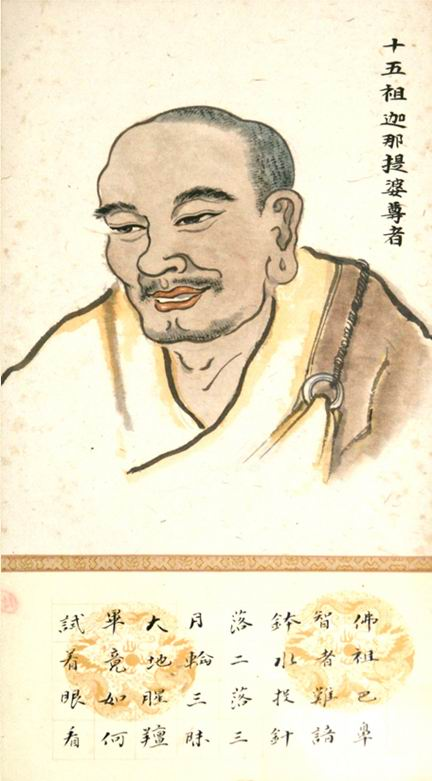
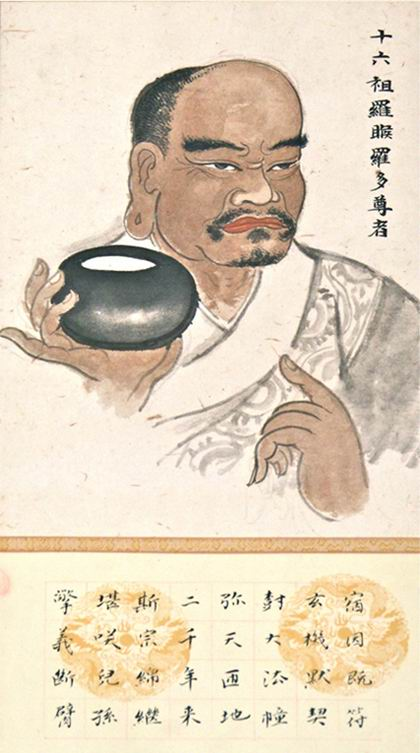
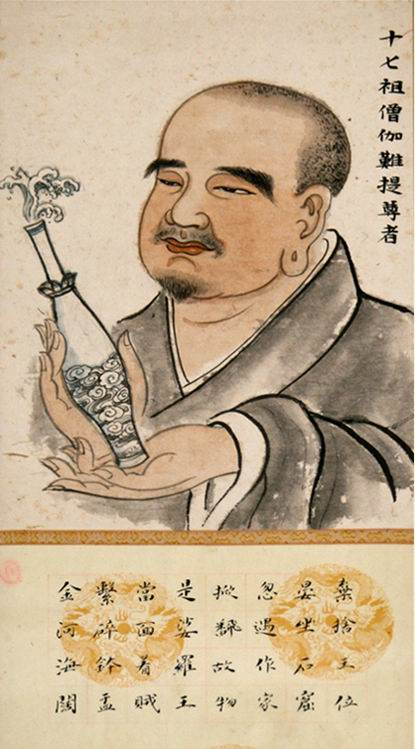
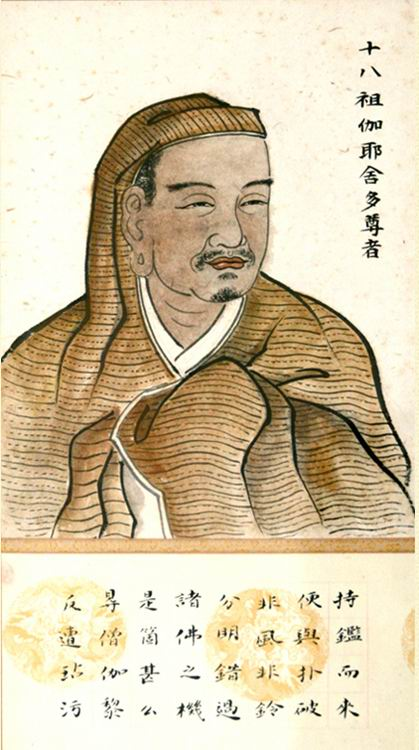
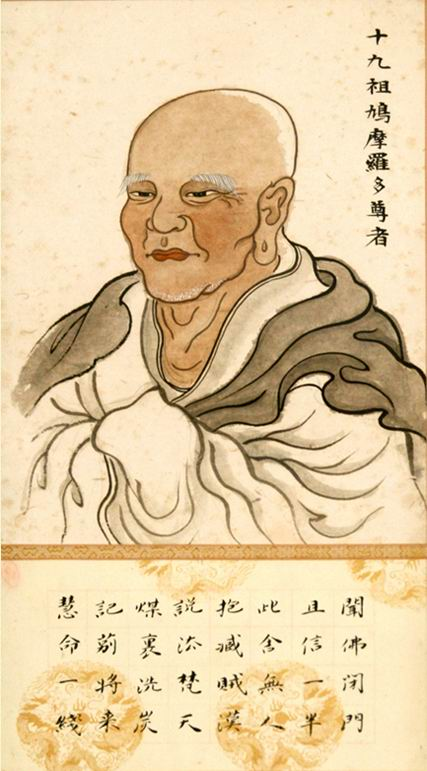
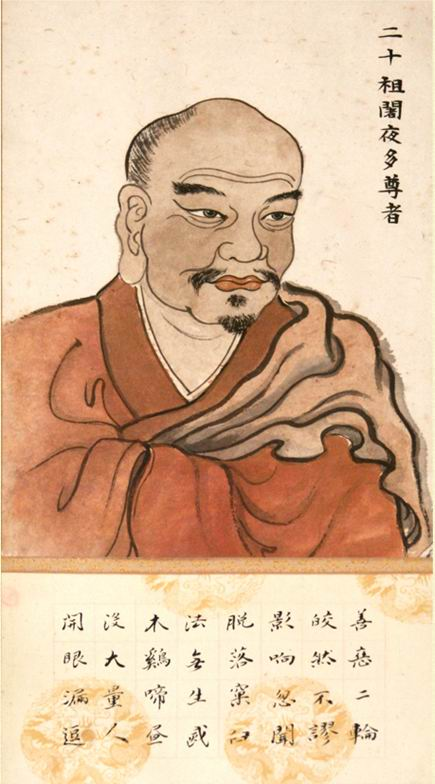
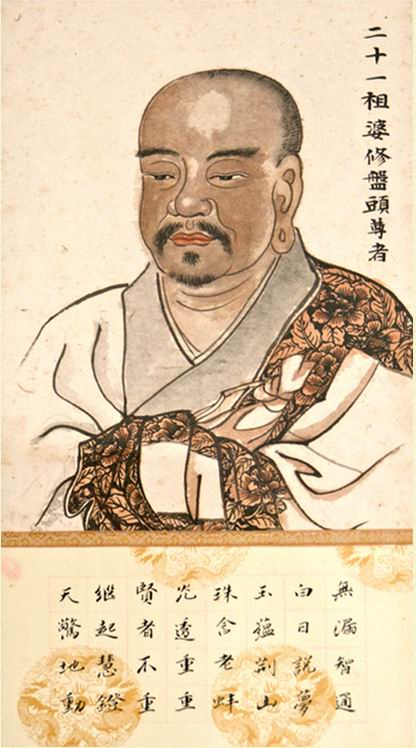
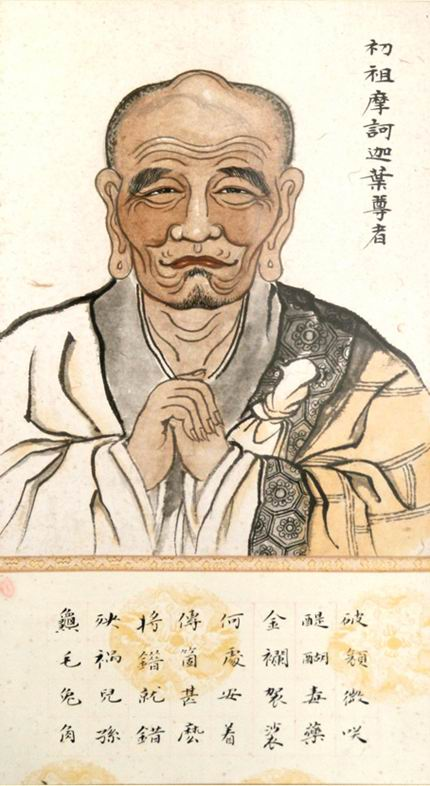
Explore the traditional succession through twenty-eight colour portraits, from Mahākāśyapa to Bodhidharma. Choose a teacher to follow the stories and the teaching passed onward.

Choose a portrait, or scroll through the teachers.

See the complete succession, 01–28
  1. 01Mahākāśyapa摩诃迦叶
  2. 02Ānanda阿难
  3. 03Śāṇavāsa商那和修
  4. 04Upagupta优波鞠多
  5. 05Dhṛtaka提多迦
  6. 06Miccaka弥遮迦
  7. 07Vasumitra婆须密
  8. 08Buddhanandi佛陀难提
  9. 09Buddhamitra伏驮蜜多
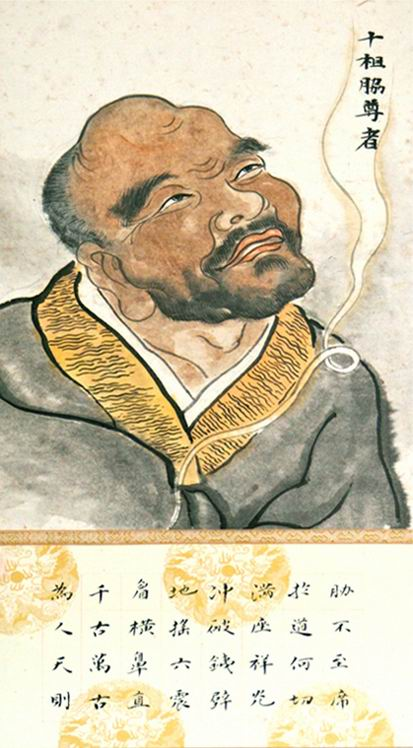
  10. 10Pārśva胁尊者
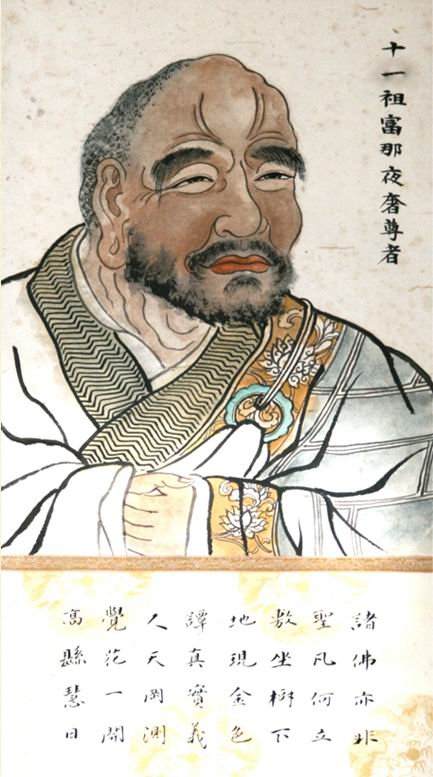
  11. 11Puṇyayaśas富那夜奢
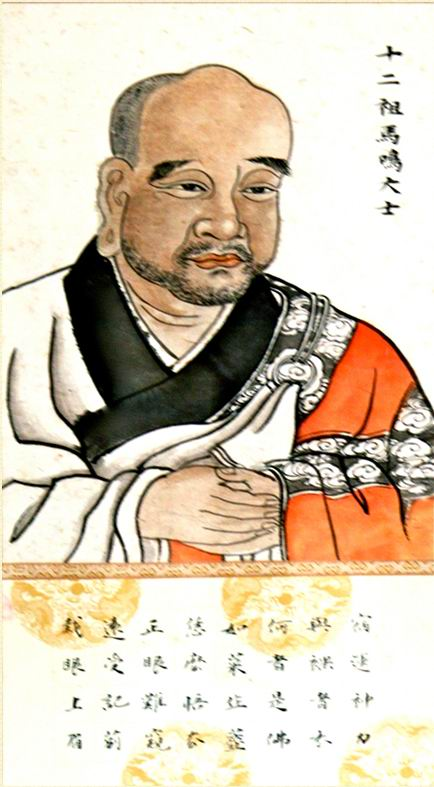
  12. 12Aśvaghoṣa马鸣
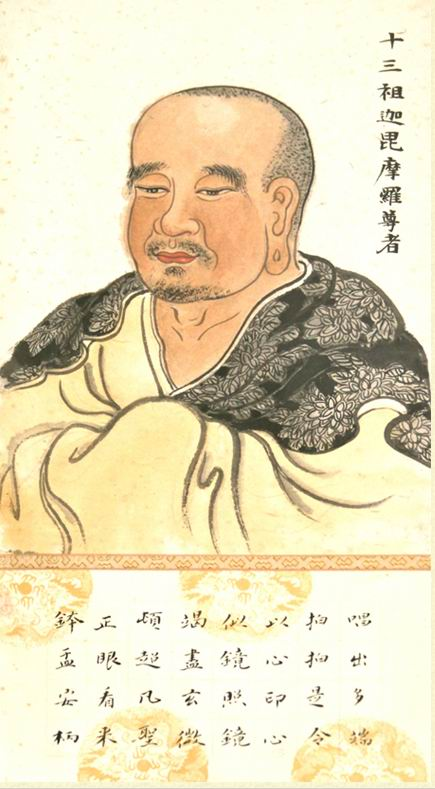
  13. 13Kapimala迦毗摩罗
  14. 14Nāgārjuna龙树
  15. 15Kāṇadeva迦那提婆
  16. 16Rāhulata罗睺罗多
  17. 17Saṅghanandi僧伽难提
  18. 18Gayāśata伽耶舍多
  19. 19Kumāralāta鸠摩罗多
  20. 20Jayata阇夜多
  21. 21Vasubandhu婆修盘头
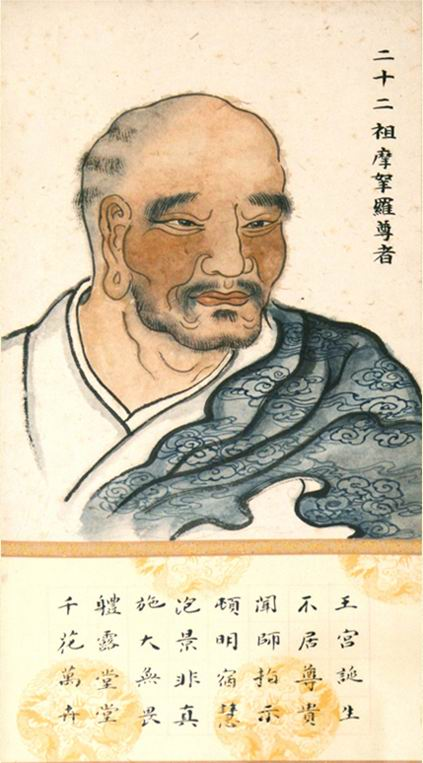
  22. 22Manorhita摩拏罗
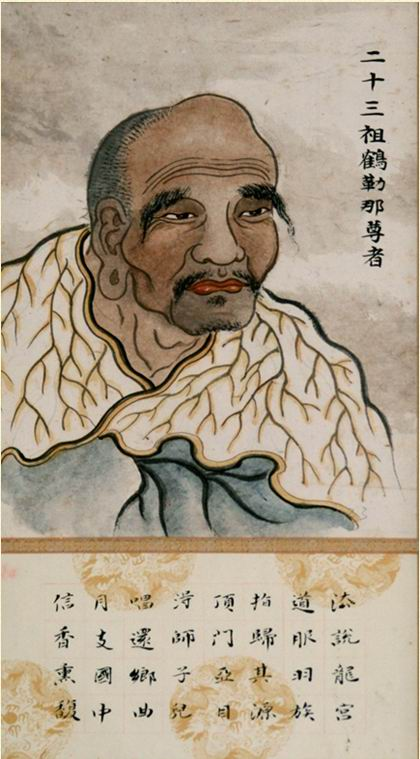
  23. 23Haklena鹤勒那
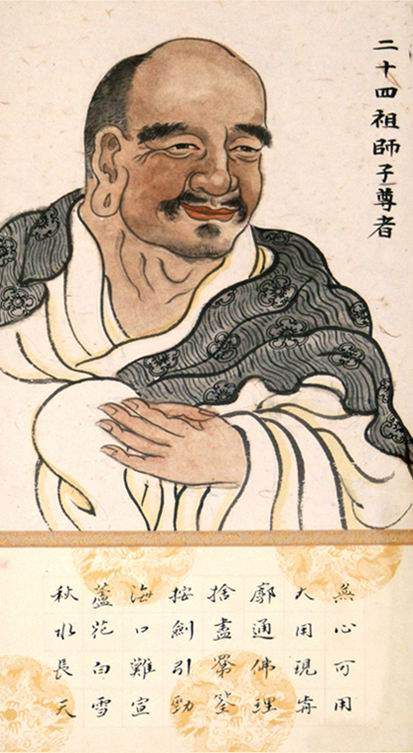
  24. 24Siṃha师子尊者
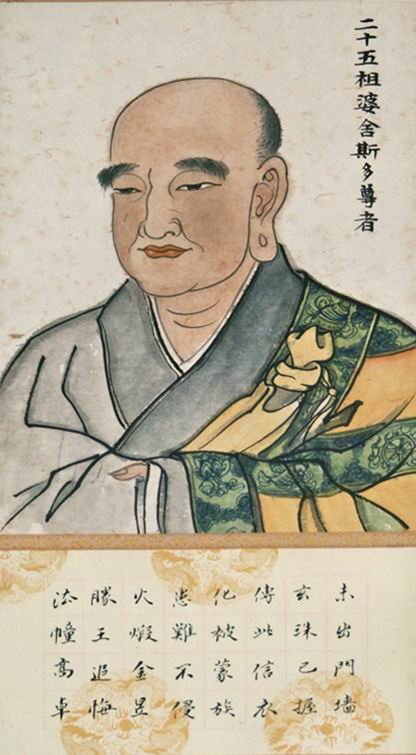
  25. 25Vasiasita婆舍斯多
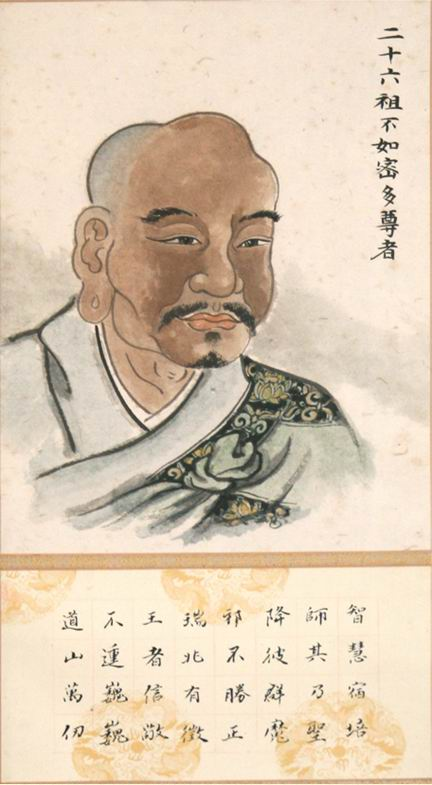
  26. 26Puṇyamitra不如蜜多
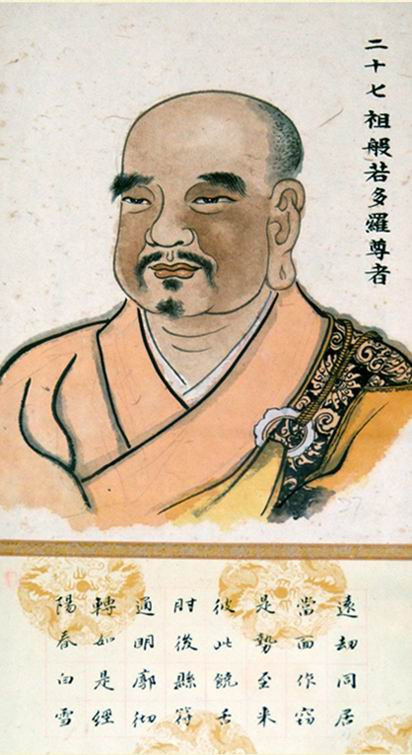
  27. 27Prajñātāra般若多罗
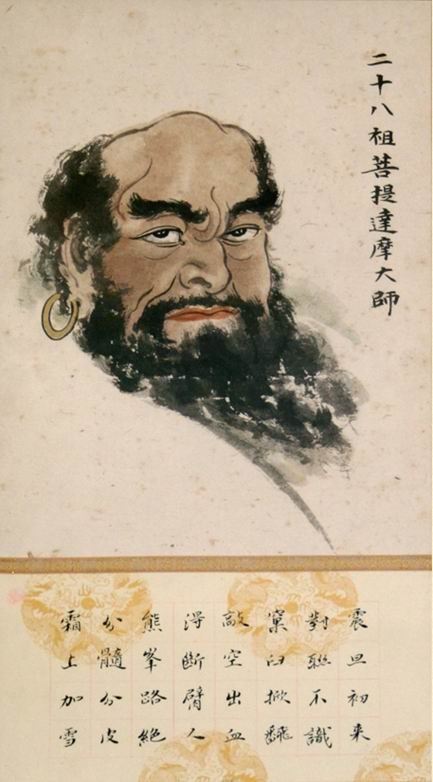
  28. 28Bodhidharma菩提达摩

Portraits: Terebess’ collection of the twenty-eight Indian patriarchs. These are traditional representations, not portraits made from life. Stories follow Persons, volume nine of Sancai Tuhui; names vary in transliteration. Bodhidharma is counted once in India and begins a new numbering in China.

Who was Bodhidharma?

The two lineages meet in one figure. Bodhidharma is remembered as the twenty-eighth Indian patriarch and the first patriarch of Chan in China. Early sources associate him with meditation and the teaching transmitted to Huike.

In the best-known account he travels from southern India by sea, reaches southern China, encounters Emperor Wu of Liang and continues north towards Shaolin. The single-reed crossing belongs to the story of the Yangtze, not the ocean voyage. His exact origin and arrival date remain uncertain.

Hualin Temple in Guangzhou, Dingshan Temple near Nanjing and Shaolin on Mount Song preserve different chapters of this remembered journey. Follow them on the map below.

Research background: Stanford Encyclopedia of Philosophy: Chan Buddhism · Study of Bodhidharma’s disputed arrival date.

Follow the journey on the map ↓

Chan grew through people and places.

The traditional succession from Bodhidharma to Huike, Sengcan, Daoxin, Hongren and Huineng is a way Chan communities remember their origins. The evidence for each life is uneven, and later biographies shaped the continuous lineage familiar today. Treat the stories as part of the tradition while asking what their sources can establish.

From the fourth and fifth patriarchs’ larger communities in the Huangmei area to the traditions surrounding Huineng in Guangdong, Chan developed within Chinese Buddhist practice and language. Its later branches spread through teachers, monasteries and texts rather than a single traveller’s route. The map and family tree below show those distinct layers; the Chan Journey brings the route map and daily itinerary together in a practical travel order.

Watch a tradition take shape.

INDIAN SUBCONTINENTSEA ROUTE · SCHEMATIC

The cartoon and route are editorial illustrations of traditional accounts. Southern India is only an approximate origin; the port, sea path and duration are unverified. “One reed” refers to a Yangtze legend. Read the historical background ↗ · Read the research on disputed dates ↗

One line becomes many branches.

Read from Bodhidharma to Huineng across the top. The tradition then branches through Nanyue and Qingyuan towards the Five Houses; Huanglong and Yangqi are later branches of Linji, forming the familiar “Seven Schools” account.

Bodhidharma菩提达摩Huike慧可Sengcan僧璨Daoxin道信Hongren弘忍Huineng慧能Nanyue Huairang · 南岳怀让Mazu Daoyi → Baizhang HuaihaiQingyuan Xingsi · 青原行思Shitou Xiqian · 石头希迁Guiyang · 沩仰宗Guishan LingyouYangshan HuijiLinji · 临济宗Huangbo Xiyun → Linji Yixuanlater: Shishuang ChuyuanCaodong · 曹洞宗Yaoshan → YunyanDongshan → CaoshanToward XuefengDaowu → Longtan → DeshanXuefeng YicunHuanglong黄龙派Yangqi杨岐派Yunmen云门宗Fayan法眼宗

This is a selected map of traditional affiliation, not every teacher or a verified chain of dated encounters. Some connections are debated by historians.

Explore the detailed, generation-by-generation chart ↗

Follow Xuyun into the mountains.

Zhenru Temple on Yunju Shan

Yunju Shan & Zhenru

Explore a later Caodong Chan centre, its farming tradition and Xuyun’s final chapter. He began reviving the monastery in 1953 and died here in 1959.

Explore Zhenru Temple ↗
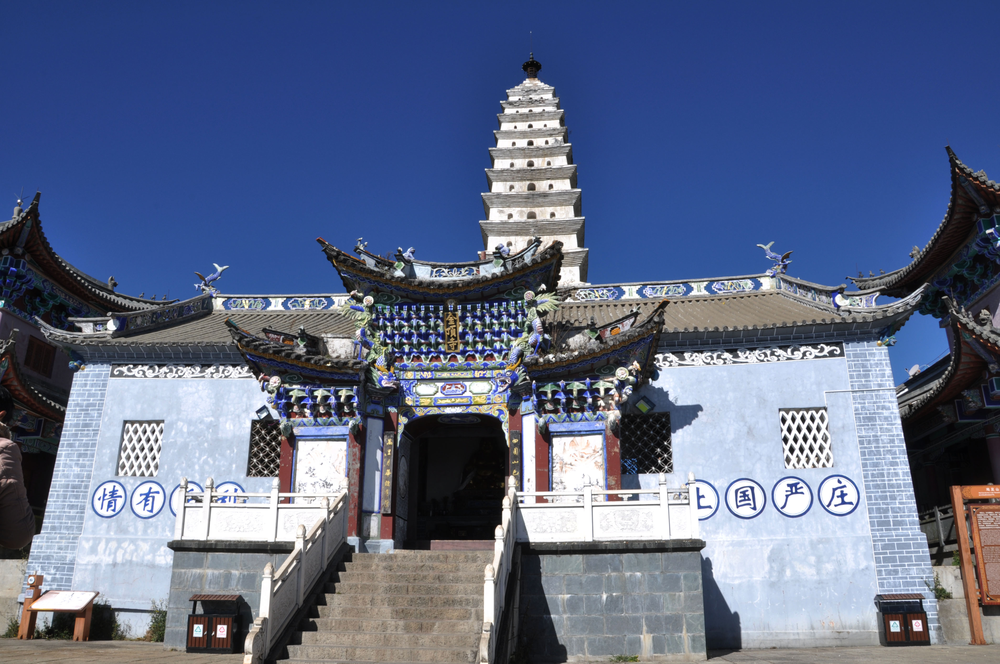
Jinding Temple on Jizu Shan in Yunnan

Jizu Shan

Mahākāśyapa’s sacred story, forest temples and Xuyun’s work at Zhusheng Temple add a distinct Yunnan exploration, with time for its own mountain setting.

Explore Jizu Shan ↗
From one story to many routes.

More Buddhist places to explore ↗Shape a personal journey ↗