Begin with Mahākāśyapa and the twenty-eight Indian patriarchs, then follow Bodhidharma into China and the branches that became the Five Houses and Seven Schools.
FROM MAHĀKĀŚYAPA TO BODHIDHARMA
Twenty-eight Indian patriarchs.
Explore the traditional succession through twenty-eight colour portraits, from Mahākāśyapa to Bodhidharma. Choose a teacher to follow the stories and the teaching passed onward.
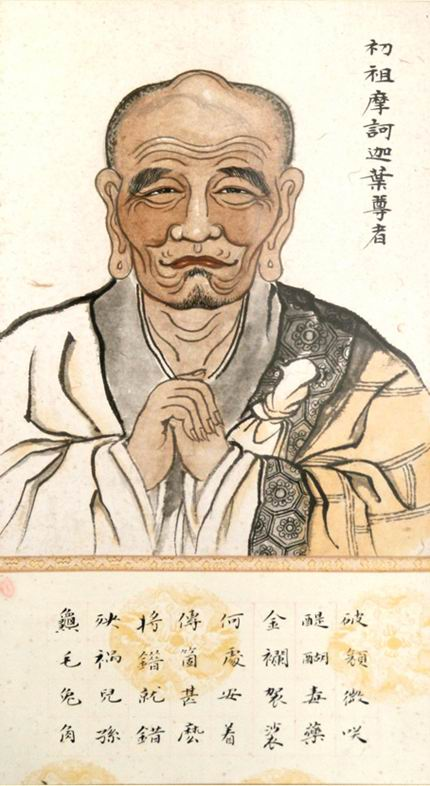
The Buddha’s disciple is remembered as the first patriarch in the traditional Indian lineage. The Flower Sermon places his wordless recognition at its beginning; Jizu Shan in Yunnan carries the separate belief that he safeguards the Buddha’s robe while awaiting Maitreya.
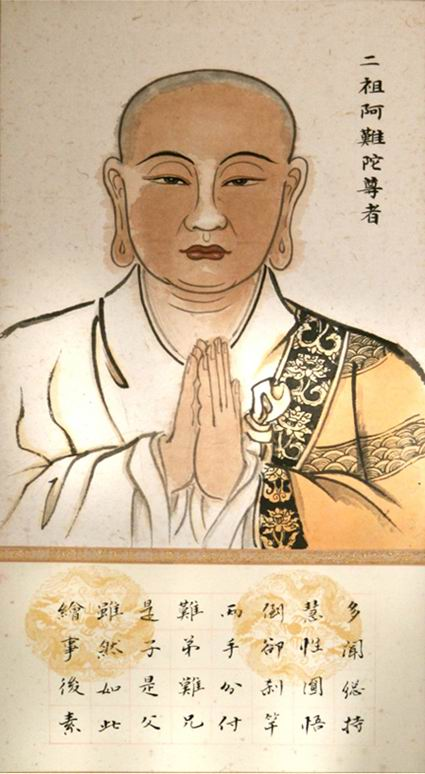
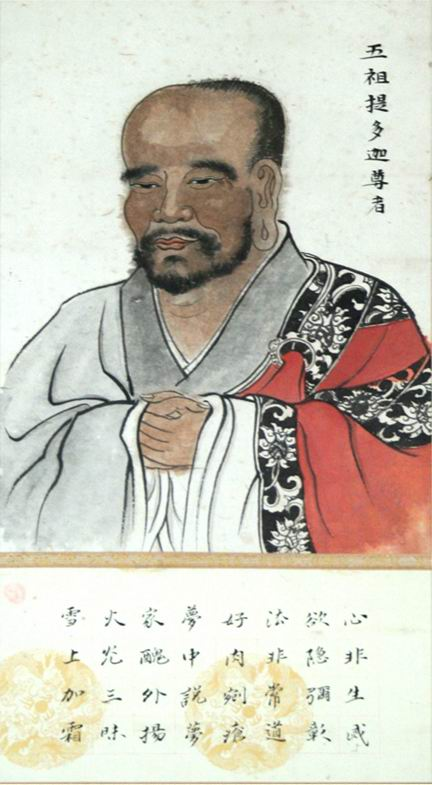
The Buddha’s attendant is remembered for hearing and retaining his teachings. In the patriarchal account, Mahākāśyapa entrusts the transmission to him, and he passes it to Śāṇavāsa.
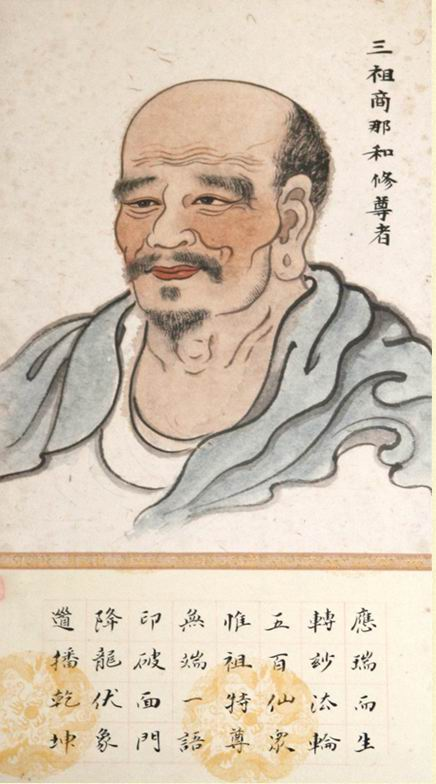
His encounter with the young Upagupta turns on a question: does a person’s age describe their body or their true nature? The exchange becomes a story about recognising understanding beyond outward appearances.
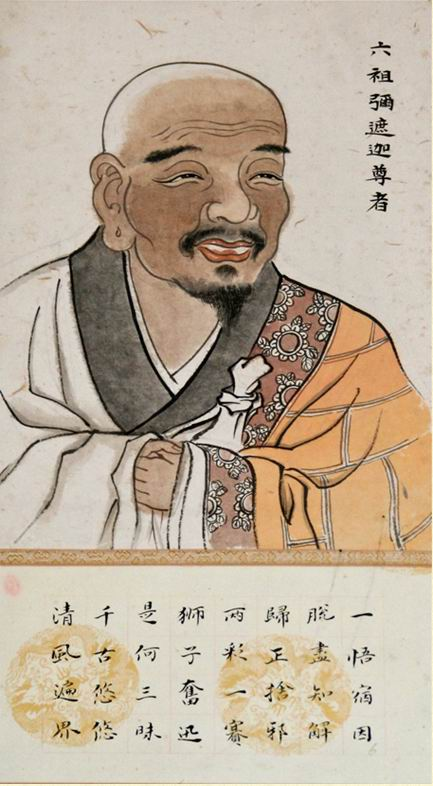
Asked whether leaving home concerns the body or the mind, he answers beyond that distinction. The account later has him welcome Miccaka and his followers into Buddhist practice.
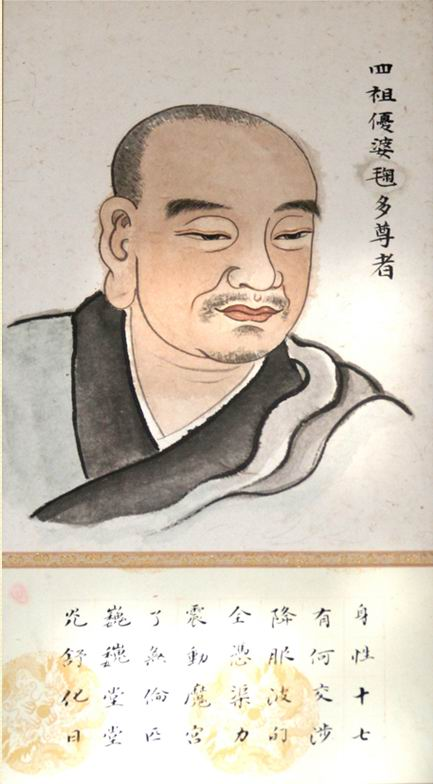
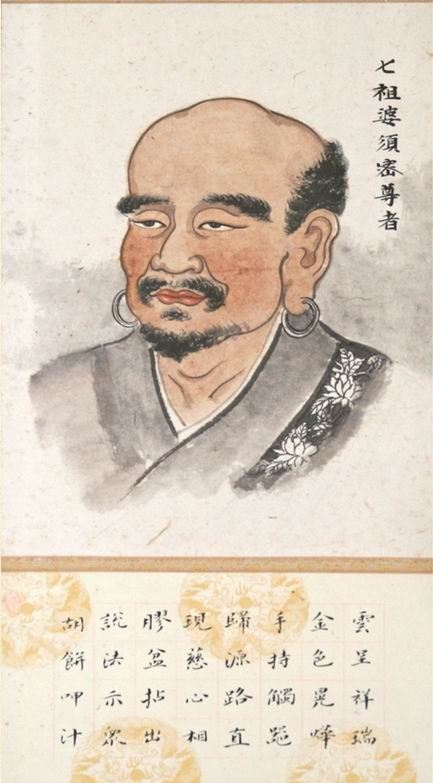
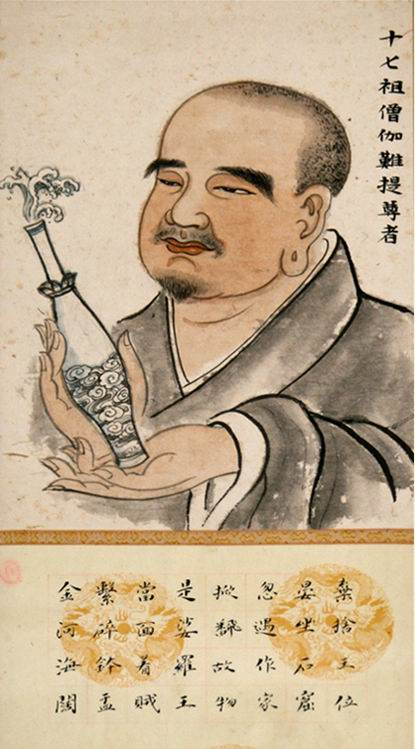
A meeting with Vasumitra, carrying a drinking vessel, becomes the turning point in this chapter. The outwardly unconventional traveller is recognised as the next bearer of the teaching.
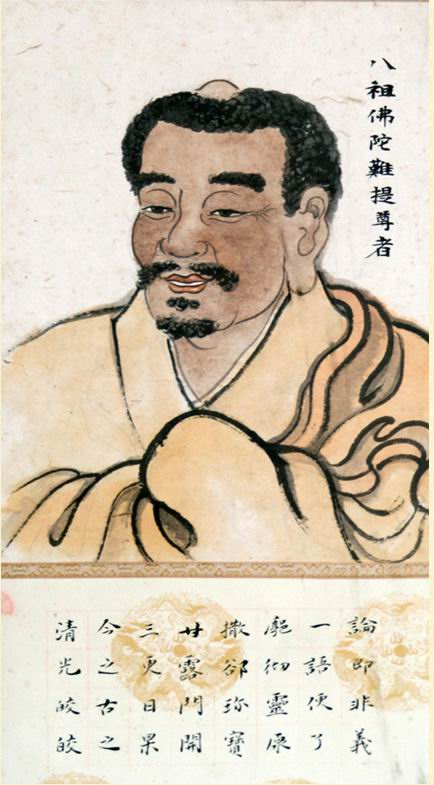
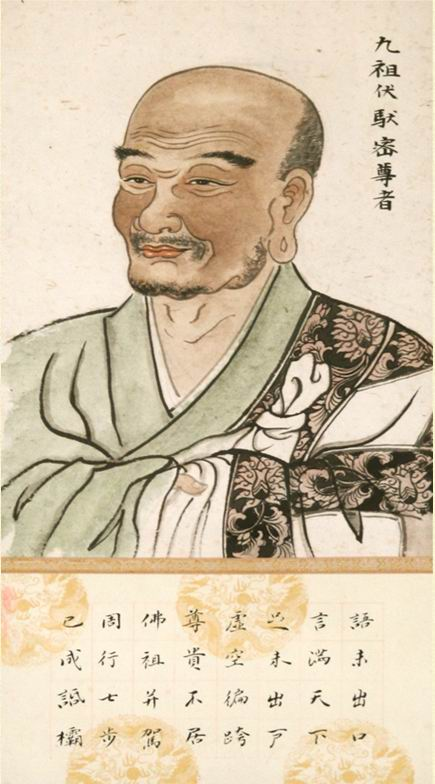
His dialogue with Buddhanandi questions whether debate alone reaches the meaning of the teaching. The encounter ends in a request to practise and receive transmission.
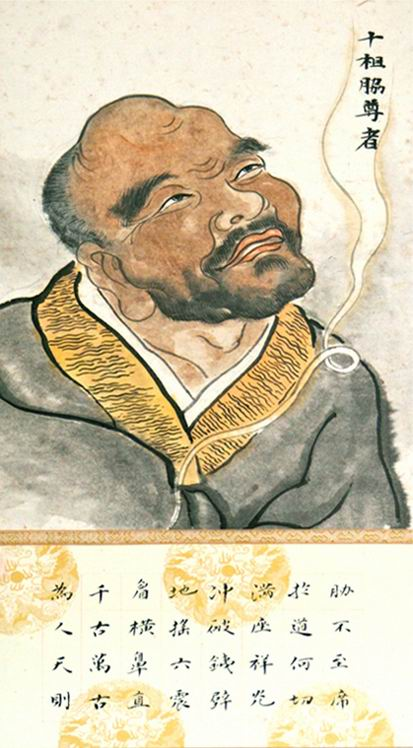
The narrative turns toward the ordination and dedicated practice of Pārśva. Buddhamitra entrusts him with the teaching, continuing the remembered succession.
His Chinese name recalls the tradition that he practised so diligently that his side never touched a sleeping mat. His exchange with Puṇyayaśas explores a mind beyond coming, going and fixed dwelling.
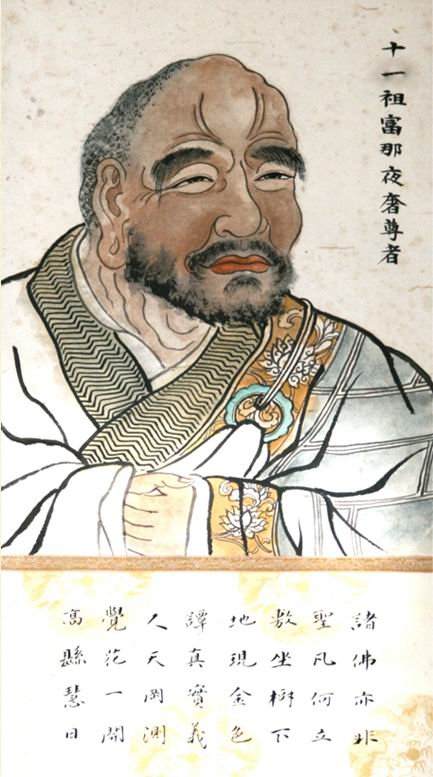
His chapter centres on recognising Aśvaghoṣa and welcoming him as a disciple. The story links teaching with a change of understanding, rather than with worldly status.
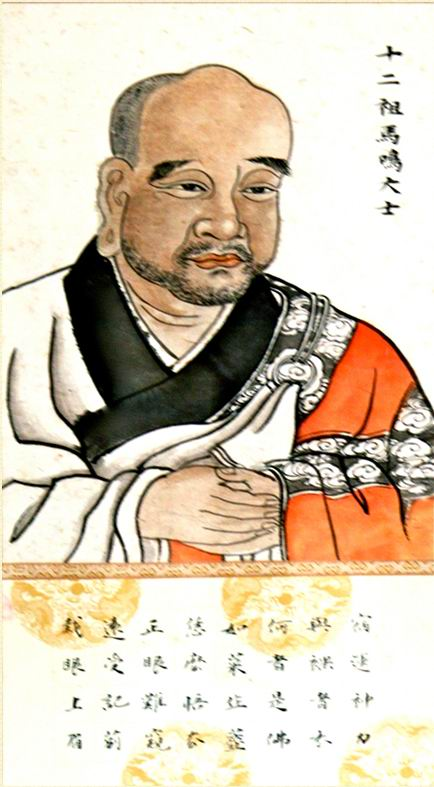
A dramatic tale has Kapimala display supernatural power before him. Aśvaghoṣa directs the encounter toward insight into the mind, and Kapimala asks to enter Buddhist practice.
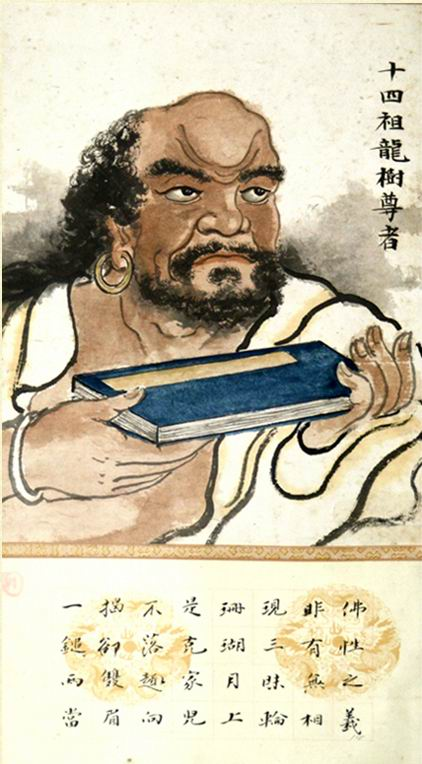
The narrative brings him to a great tree, where he encounters Nāgārjuna teaching a gathering associated with dragons. The meeting prepares the next chapter of the lineage.
In the patriarchal story, a moonlike manifestation conveys the teaching without a long explanation. Kāṇadeva recognises its meaning and becomes his successor.
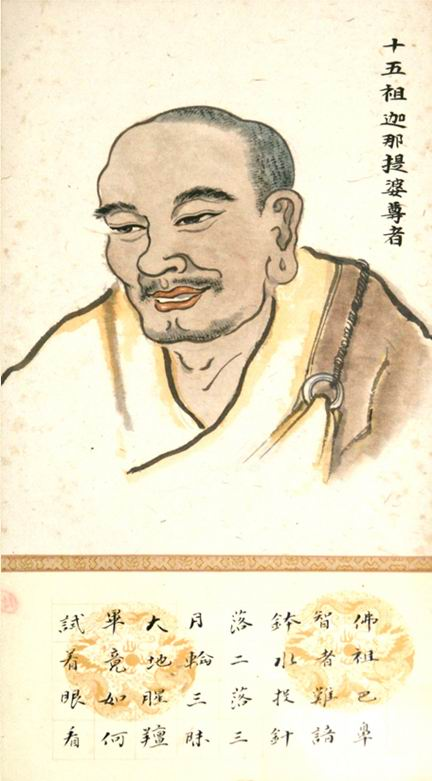
A bowl filled with water and a needle placed within it become the gestures of recognition between Nāgārjuna and Kāṇadeva. Later, Kāṇadeva receives Rāhulata as a disciple.
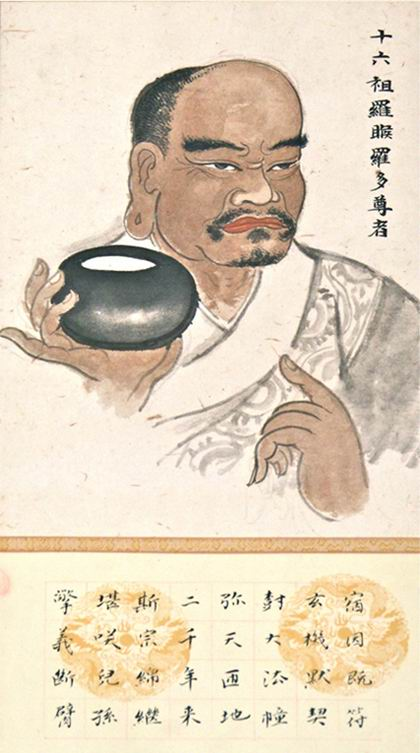
His conversation with Saṅghanandi asks whether meditation belongs to the body or the mind. It points toward steadiness without treating awareness as something confined or possessed.
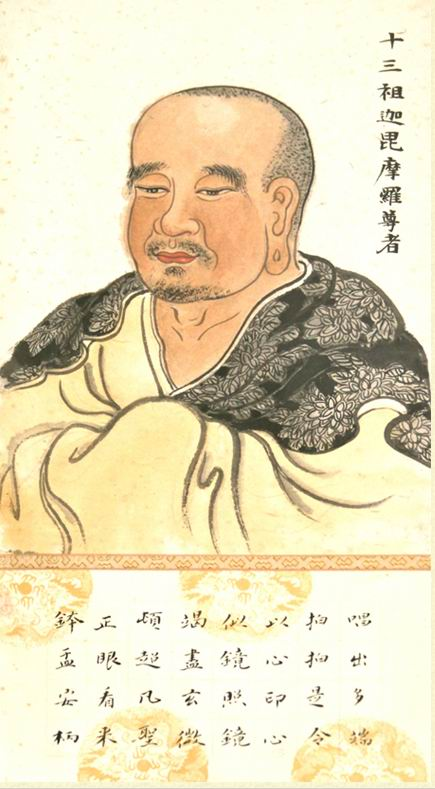
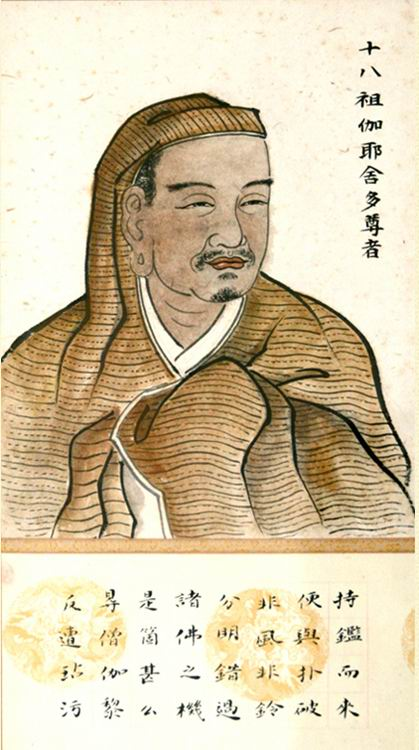
Remembered as a prince who turns toward monastic life, he later encounters the young Gayāśata carrying a mirror. Their dialogue makes the mirror an image of shared, unobstructed understanding.
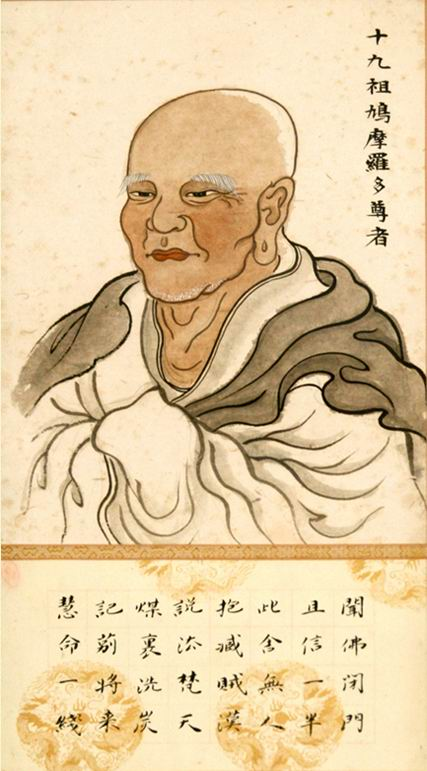
A closed door gives this chapter its memorable exchange. Kumāralāta says the house is empty; Gayāśata asks who has answered, opening a meeting that leads to transmission.
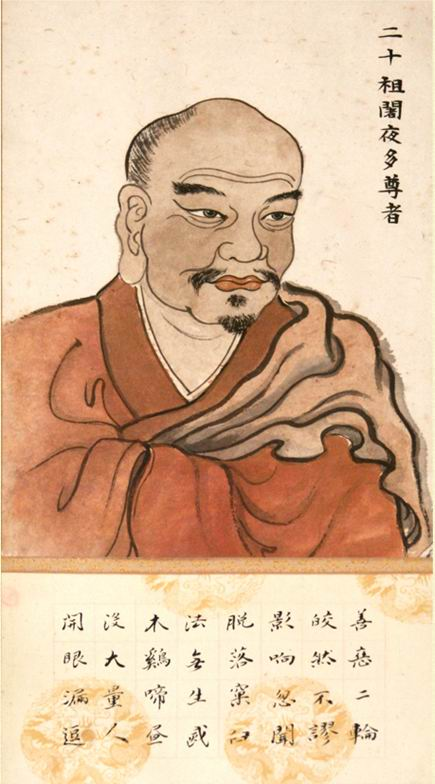
Jayata comes to him puzzled by the suffering of a devout family and the apparent good fortune of others. The narrative explores karma, confusion and the deeper nature of mind.
His encounter with Vasubandhu challenges reliance on severe ascetic practice alone. The remembered teaching turns attention toward understanding rather than attachment to a method.
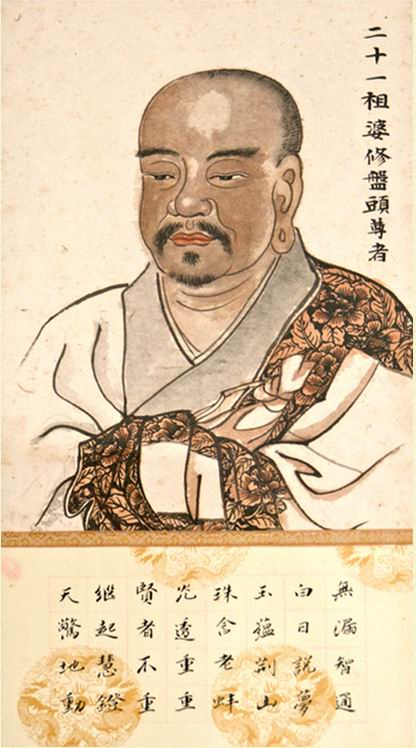
After receiving transmission from Jayata, he meets Manorhita, a king’s son who enters monastic life. This chapter joins an inherited teaching with the decision to leave royal privilege.
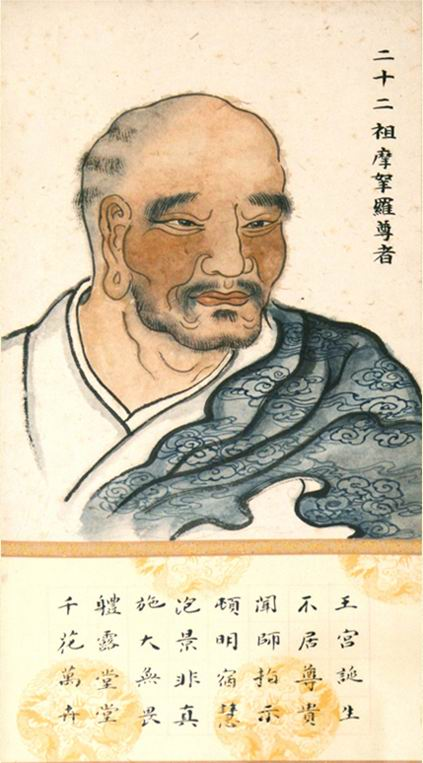
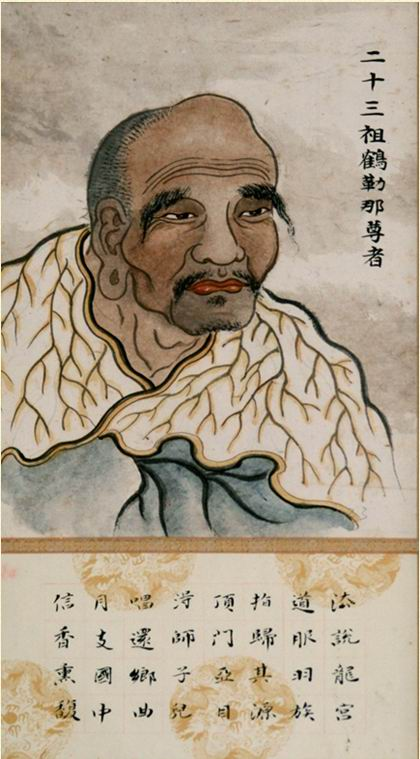
A flock of cranes accompanies Haklena in this traditional account. Manorhita explains their connection through a story of former lives and teaches a verse through which they are said to find release.
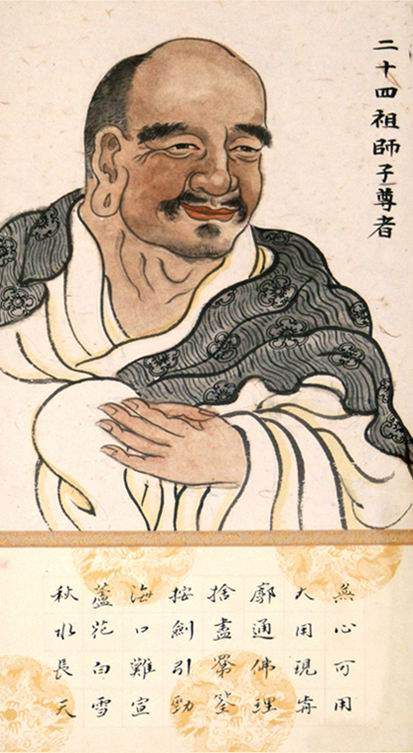
Siṃha asks how to apply the mind in seeking the way. Their exchange questions deliberate grasping, and Siṃha is recognised as the next bearer of the teaching.
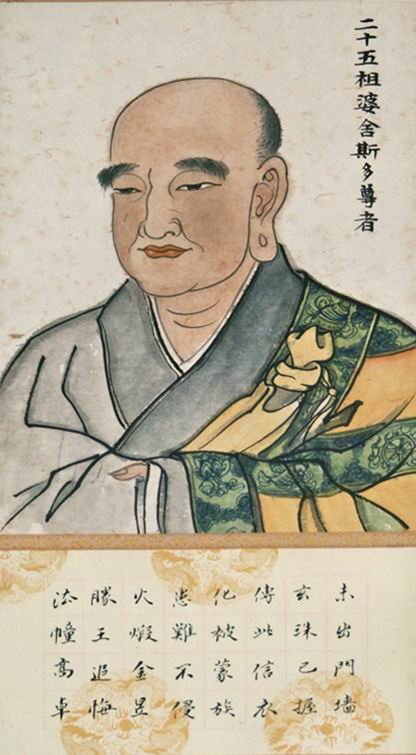
A child’s tightly closed hand opens to reveal a jewel when Siṃha asks for its return. The story identifies that child, Vasiasita, as his future disciple and successor.
His traditional life includes a hot spring, a spirit and an act of reconciliation. The story portrays a teacher bringing relief through the Dharma; his successor is Puṇyamitra.
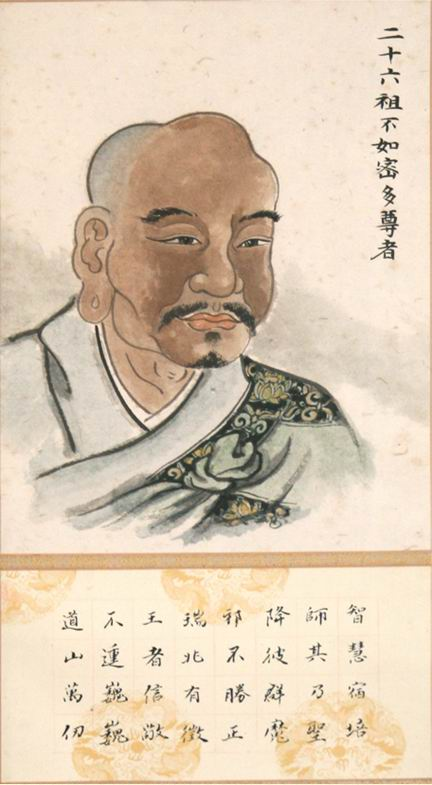
Remembered as a royal son who becomes a monk, he receives transmission from Vasiasita. Their account distinguishes the teaching itself from the robe that sometimes serves as its outward sign.
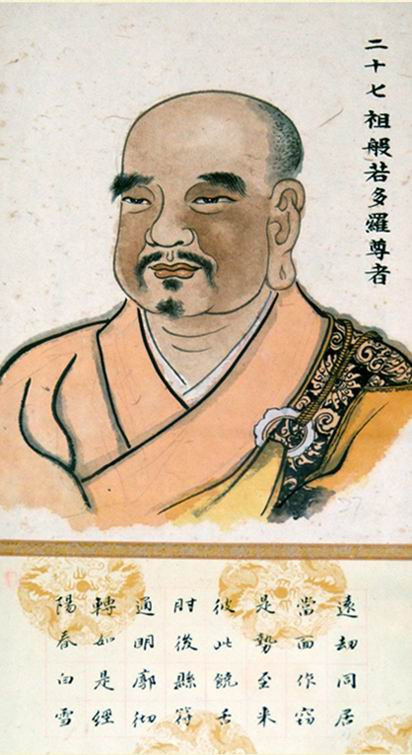
A precious jewel becomes the subject of an exchange with the young Bodhidharma. His answer places the treasure of the Dharma and the light of wisdom above material brilliance.
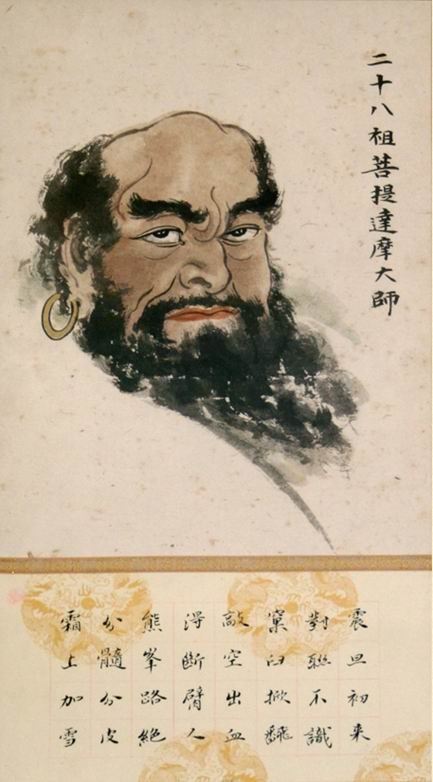
The twenty-eighth patriarch of the traditional Indian succession is also the first patriarch in China. His remembered sea journey, meeting with the Liang emperor and association with Shaolin connect the Indian origin story with the Chinese Chan tradition.
Read each column downward. Numbers count generations along that branch, beginning with Bodhidharma as 01. The lines below select the principal named transmissions leading to each house; they are not a complete list of every Chan teacher. The neat genealogy was assembled and debated over centuries, so it should be read as a traditional map of affiliation, not a verified chain of dated encounters.
Huineng’s remembered successors include Heze Shenhui (荷泽神会). The two lines followed below, Nanyue and Qingyuan, became central to the later Five Houses.
HUINENG → NANYUE
The Nanyue line
07Nanyue Huairang南岳怀让
08Mazu Daoyi马祖道一
09Baizhang Huaihai百丈怀海
Guiyang · 沩仰宗
10Guishan Lingyou沩山灵祐
11Yangshan Huiji仰山慧寂
First of the five houses in the traditional account.
Linji · 临济宗
10Huangbo Xiyun黄檗希运
11Linji Yixuan临济义玄
12Xinghua Cunjiang兴化存奖
13Nanyuan Huiyong南院慧颙
14Fengxue Yanzhao风穴延沼
15Shoushan Shengnian首山省念
16Fenyang Shanzhao汾阳善昭
17Shishuang Chuyuan石霜楚圆
From Shishuang Chuyuan, two later lines became known as Huanglong and Yangqi.
LINJI → TWO MORE SCHOOLS
Huanglong · 黄龙派
18Huanglong Huinan黄龙慧南
Yangqi · 杨岐派
18Yangqi Fanghui杨岐方会
HUINENG → QINGYUAN
The Qingyuan line
07Qingyuan Xingsi青原行思
08Shitou Xiqian石头希迁
Caodong · 曹洞宗
09Yaoshan Weiyan药山惟俨
10Yunyan Tansheng云岩昙晟
11Dongshan Liangjie洞山良价
12Caoshan Benji曹山本寂
The Xuefeng line
09Tianhuang Daowu天皇道悟
10Longtan Chongxin龙潭崇信
11Deshan Xuanjian德山宣鉴
12Xuefeng Yicun雪峰义存
Yunmen · 云门宗
13Yunmen Wenyan云门文偃
Fayan · 法眼宗
13Xuansha Shibei玄沙师备
14Luohan Guichen罗汉桂琛
15Fayan Wenyi法眼文益
Five Houses Guiyang · Linji · Caodong · Yunmen · Fayan /Seven Schools these five, plus Huanglong and Yangqi within Linji.
The Daowu–Longtan link and some early affiliations have been contested in Chan scholarship. This diagram follows a familiar traditional presentation to help visitors navigate the literature, not to settle those debates.
Sources and editorial scope
The six-patriarch sequence and Five Houses are described by the Stanford Encyclopedia of Philosophy. The named traditional branches toward the Seven Schools follow the International Buddhist Society’s account. Scholarship also examines how genealogies were constructed and revised.