China Beyond Travel · Updated
A flower held in silence. A smile of understanding. A closed stone gate in the mountains of Yunnan. The stories of Mahākāśyapa give Jizu Shan a place in the imagination of Chan pilgrims far beyond its forest paths and summit views.
Explore this quieter mountain chapter from Dali, with time for its stories, temples and landscape.
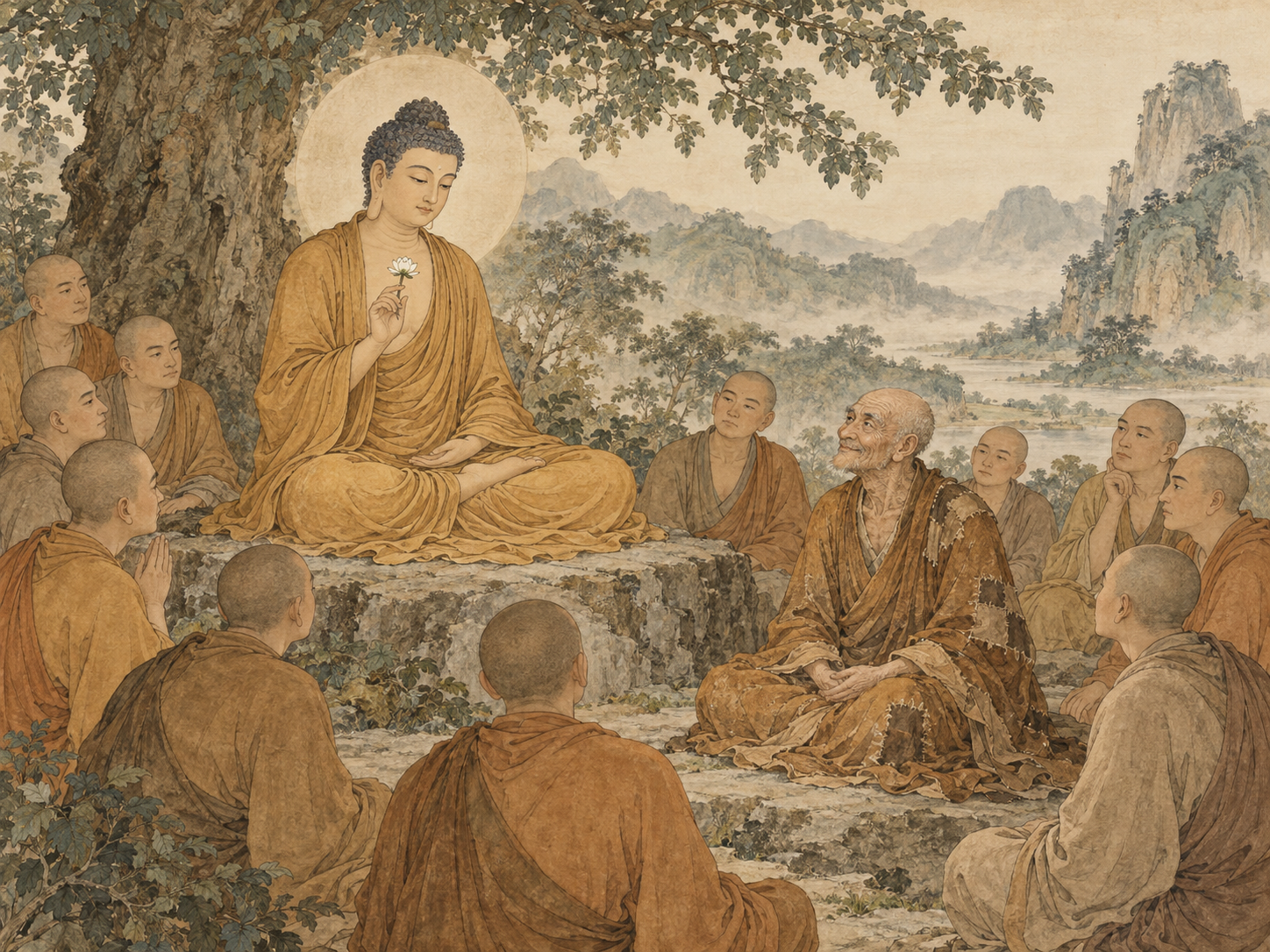
A flower, a smile — the beginning of Chan
At Vulture Peak in India, the story goes, Shakyamuni Buddha held up a flower without speaking. The assembly was silent. Only his disciple Mahākāśyapa smiled. The Buddha recognised his understanding and entrusted the teaching to him: a moment remembered as the Flower Sermon, or “holding up a flower and smiling”.
For Chan, the smile expresses an understanding that words alone cannot convey. In its traditional lineage, Mahākāśyapa is the first Indian patriarch. The succession leads through twenty-eight patriarchs to Bodhidharma, remembered both as India’s twenty-eighth and China’s first. Jizu Shan’s devotion to Mahākāśyapa connects this Yunnan mountain with that much wider story.
- Mahākāśyapa1st Indian patriarch
- Bodhidharma28th Indian · 1st Chinese patriarch
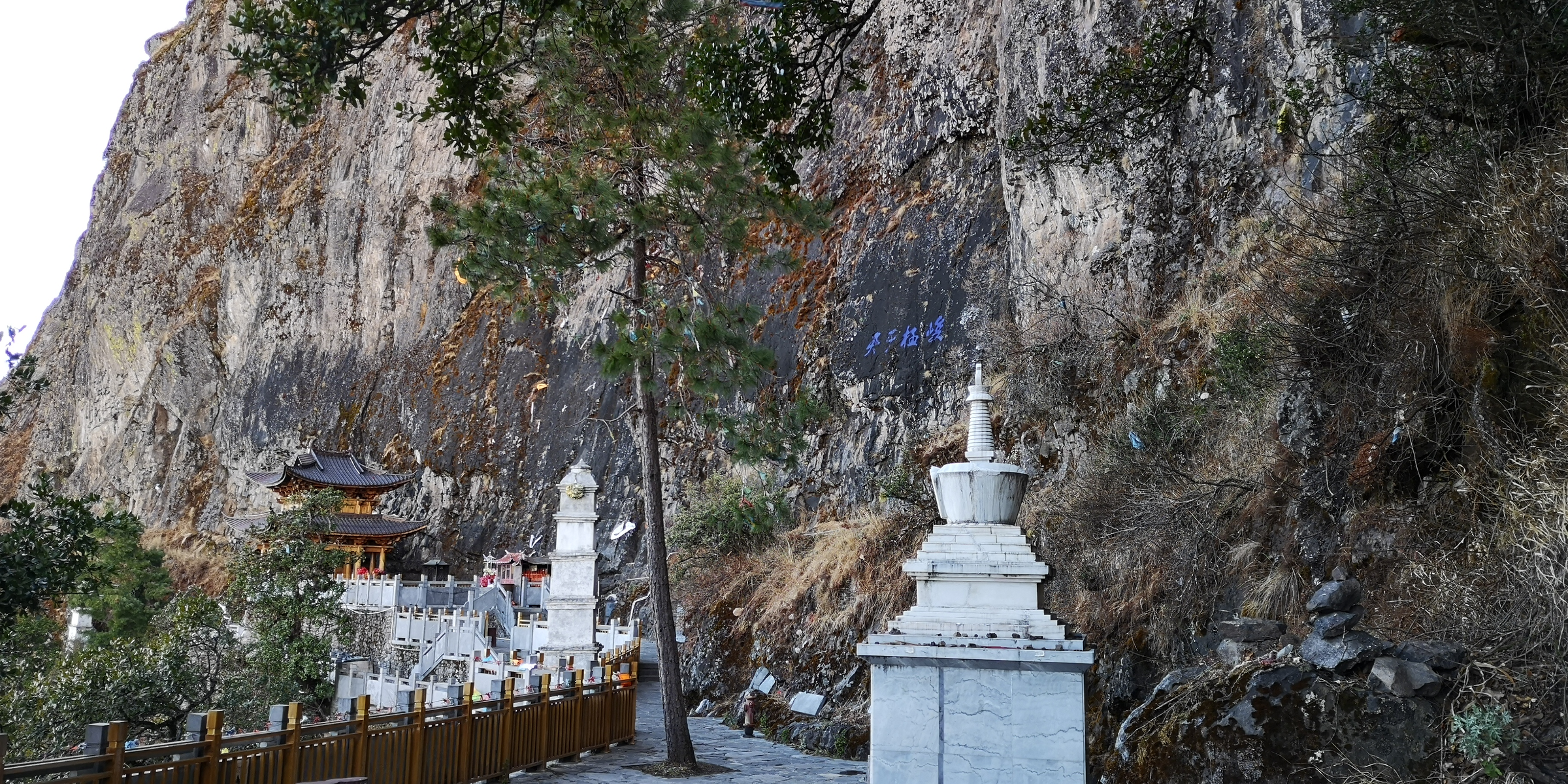
Huashou Gate — the robe and the bells
At Huashou Gate, the cliff face resembles a pair of enormous closed doors. In local Buddhist belief, Mahākāśyapa rests within, guarding Shakyamuni’s robe until the future Buddha Maitreya appears. The flower belongs to the story of transmission; the robe gives this mountain its own story of patient waiting.
Xuyun’s autobiographical chronicle records a pilgrimage here in 1889. As he offered incense and bowed at the gate, he heard three deep bell sounds. Local pilgrims greeted them as an auspicious sign; Xuyun declined their praise. The account remains part of the mountain’s devotional memory, alongside his later work to revive its temples.
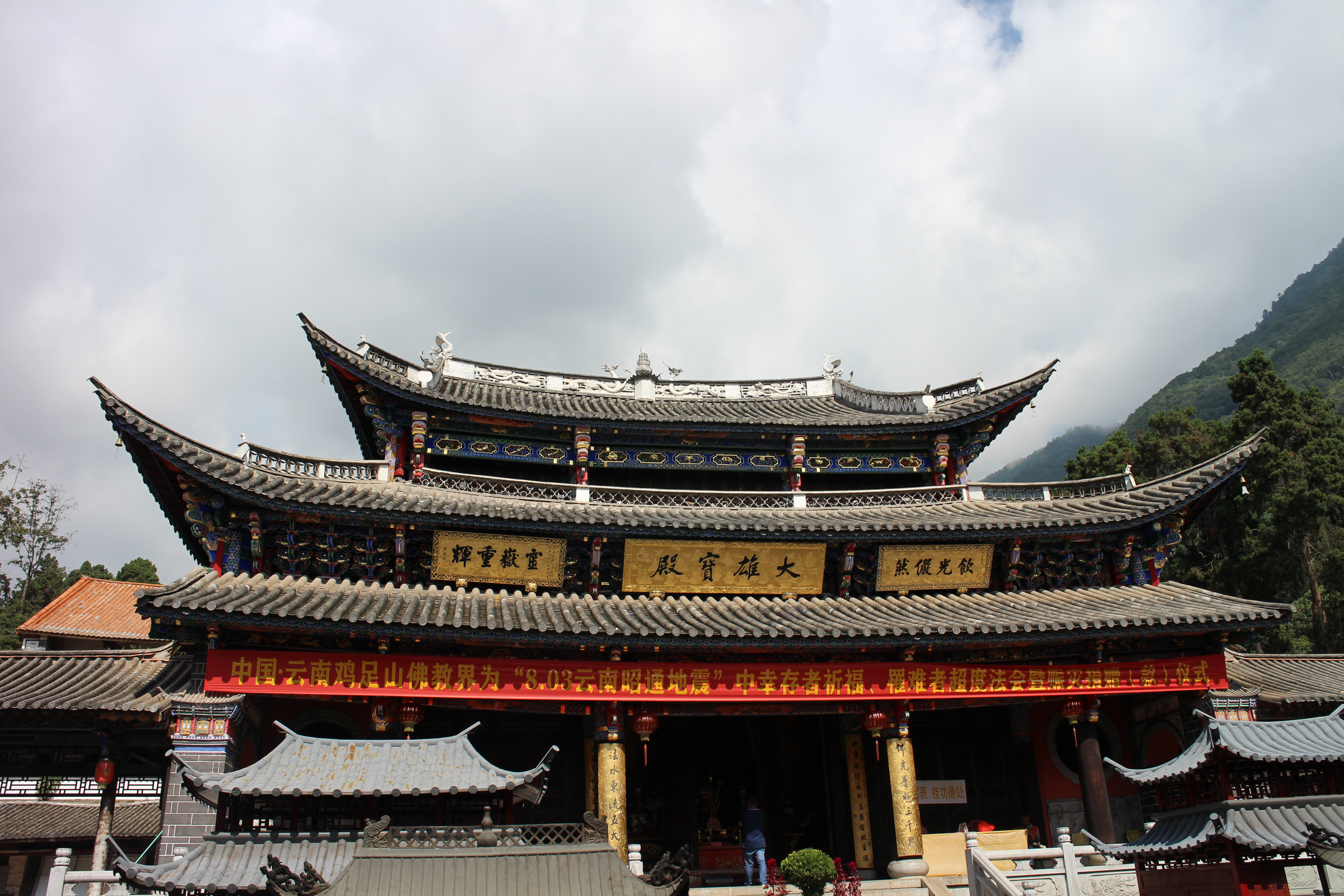
Xuyun and the living mountain temples
Begin at Zhusheng Temple, where wooded courtyards bring the mountain’s religious life to a human scale. Xuyun helped revive the monastery in the early twentieth century. His work here connects with later chapters at Nanhua and Yunmen in Guangdong, and Zhenru Temple on Yunju Shan in Jiangxi.
Xuyun Chan Temple is a separate temple to consider on the mountain, rather than another name for Zhusheng. Give the places you choose time to unfold: enter quietly, notice the setting, and leave room for the walks between them.
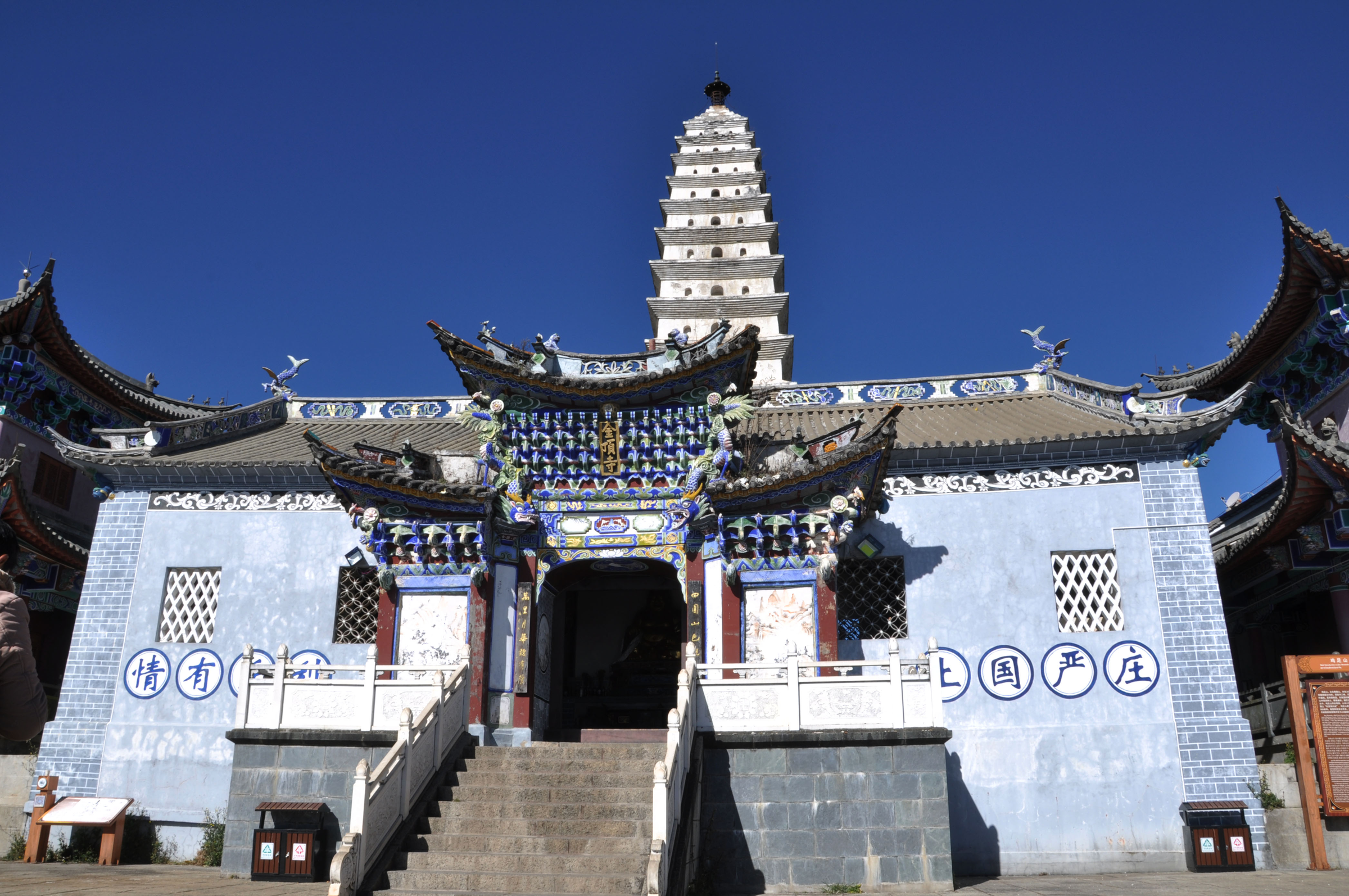
Above the trees, the Golden Summit
At Jinding Temple, temple buildings meet open sky. Clear mornings bring distant horizons; drifting clouds can make the same landscape feel inward and still. Allow time to enjoy the summit rather than treating it as a quick photograph.
The climb involves altitude, steps and exposed weather. Layers, rain protection and shoes with good grip help. If you prefer fewer climbs, a day among the lower temples offers another way to experience the mountain.
Make room for a slower mountain day
Jizu Shan works as a dedicated excursion from Dali or an overnight extension before continuing towards Lijiang. A temple-focused visit and a summit-focused visit can be shaped separately, around your interests and comfort with walking. We confirm transfers, mountain access and visitor arrangements for your dates.
A thoughtful visit
Dress modestly, follow the temple’s visitor guidance and ask before photographing people or interiors. A cultural visit does not automatically include meditation sessions, teacher meetings or monastery accommodation; we discuss any such interests separately.