
Potala, Jokhang & Norbulingka
The Historic Ensemble of the Potala Palace brings together three landmark places in Lhasa, Tibet: Potala Palace, inscribed in 1994, Jokhang Temple, added in 2000, and Norbulingka, added in 2001. UNESCO recognises their architecture, art and importance to Tibetan religious and political history. They suit travelers seeking a thoughtful introduction to Tibetan culture who can give Lhasa several unhurried days.
Planning your visit
Season & conditions
Spring and autumn are our preferred starting points for planning a cultural visit, with autumn particularly appealing for clear views and walking around the city. Bring layers for changing conditions and leave space between visits rather than filling every available hour.
Lhasa stands at approximately 3,650 metres. Plan one or two quiet days to adapt before visiting Potala Palace, which involves steps and an uphill approach. Keep the arrival day light, with rest and a short walk if you feel comfortable; adapt the following days to how you feel. This is a more enjoyable rhythm than making the palace your first major activity after arrival.
Time & pace
The official airport coach journey between central Lhasa and Gonggar Airport takes approximately 70 minutes. Once in the city, use local road transfers between the three sites, allowing time for walking at each arrival point. Jokhang sits within the old-city setting around Barkhor, while Norbulingka gives you a contrasting palace-and-garden visit.
Allow at least four days in Lhasa, including arrival and time to adapt. We suggest a separate morning for Potala, another visit for Jokhang and the surrounding streets, and a relaxed half-day for Norbulingka. Potala has limited daily visitor capacity and requires advance booking; time inside the main palace is restricted, so discuss the history before entering and save longer questions for afterwards.
Foreign visitors need a Tibet Travel Permit arranged through a licensed travel agency. CBT and our licensed partner travel agency in Lhasa can assist with the application and visit arrangements. Begin planning before booking your Tibet travel so the permit and palace reservation fit the same itinerary.
The inscribed place
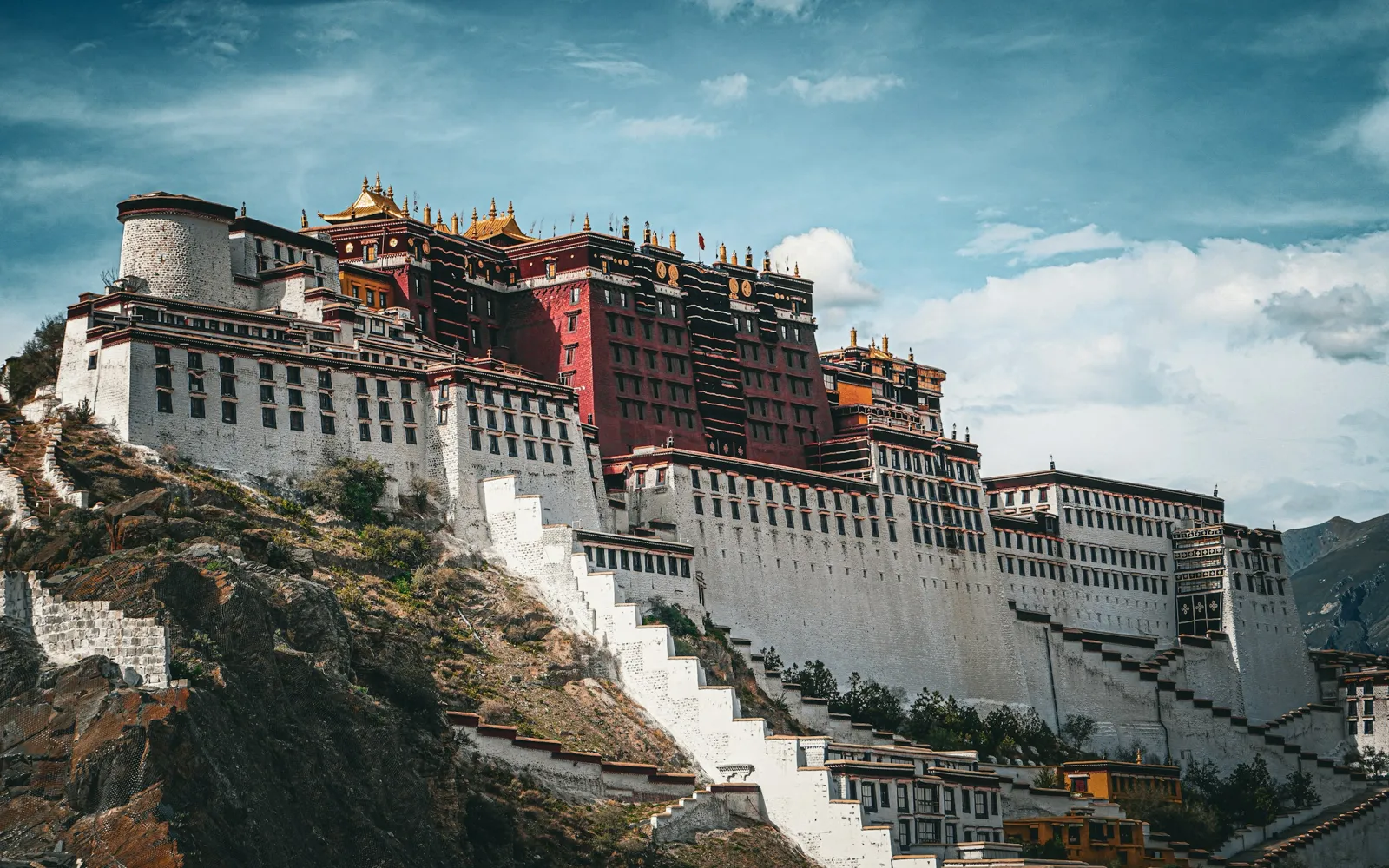
Potala Palace rises on Red Mountain, with the White and Red Palaces forming its best-known architectural grouping. Jokhang is a major religious complex in the old city, while Norbulingka was the Dalai Lamas’ summer residence. Seeing the three together helps explain different aspects of Lhasa’s ceremonial, religious and residential life.
Give each place a different focus. At Potala, follow the relationship between the building’s dramatic exterior and its interior functions. At Jokhang, take time to understand the significance of the temple within the living city. At Norbulingka, slow the pace and look at the relationship between buildings, art and gardens.
These are culturally important places as well as visitor attractions. Follow your guide’s lead on movement through religious spaces and photography, and leave room for the people using them. A visit built around a few well-explained details is more meaningful than trying to remember every room or date.
Read the official UNESCO property record ↗
Related destinations
Journeys featuring this site
Before you visit
Do I need a permit to visit Lhasa?
Yes. Foreign visitors need a Tibet Travel Permit through a licensed travel agency; CBT and our licensed Lhasa partner can help arrange it.
How many days should I allow?
We recommend at least four days, with one or two quiet days to adapt before the Potala visit.
Can I buy a Potala ticket when I arrive?
Plan an advance reservation instead. Daily capacity is limited, and the booking should be coordinated with your wider Lhasa itinerary.
Can I spend all day inside Potala Palace?
No. Time inside the main palace is restricted; allow additional time outside for the approach, explanation and views.
Use Plan Your Journey to tell us which places you would like to explore and how much time you have.