
Archaeological Ruins of Liangzhu City
The Archaeological Ruins of Liangzhu City are the remains of a late Neolithic city in Yuhang, northwest of central Hangzhou, inscribed on the UNESCO World Heritage List in 2019. They reveal a rice-growing society with sophisticated urban planning, water management and ceremonial jade traditions around 3300–2300 BCE. This is a particularly rewarding visit for travelers interested in archaeology and the early development of Chinese civilisation.
Planning your visit
Season & conditions
We recommend spring or autumn for a day combining the open archaeological landscape with the museum. The park involves time outside, so these seasons are a practical choice for walking and stopping to examine the site. In warmer weather, visit the outdoor areas first and keep the museum for the hotter part of the day.
Choose a day when you can take your time. Liangzhu is easier to appreciate when you connect what you see in the landscape with the objects and explanations indoors. Carry water and wear shoes suited to a substantial outdoor visit; this is not simply a museum stop with a brief walk attached.
Time & pace
The archaeological site is approximately 30 kilometres from downtown Hangzhou. Travel by car from the city for a straightforward excursion, leaving time for the outward and return transfers. From Shanghai, first take a high-speed train to Hangzhou, approximately one hour on suitable services, then continue by road.
We suggest a full day from Hangzhou for Liangzhu Ancient City Ruins Park and Liangzhu Museum, including transfers and lunch. Give the park around three hours and the museum one to two hours rather than squeezing both into an already busy West Lake day.
Begin with the museum if you enjoy having the historical framework first; start outdoors if the weather and light are better in the morning. The two visits answer different questions: the park shows the scale of the settlement, while the museum helps explain its people, objects and beliefs.
The inscribed place
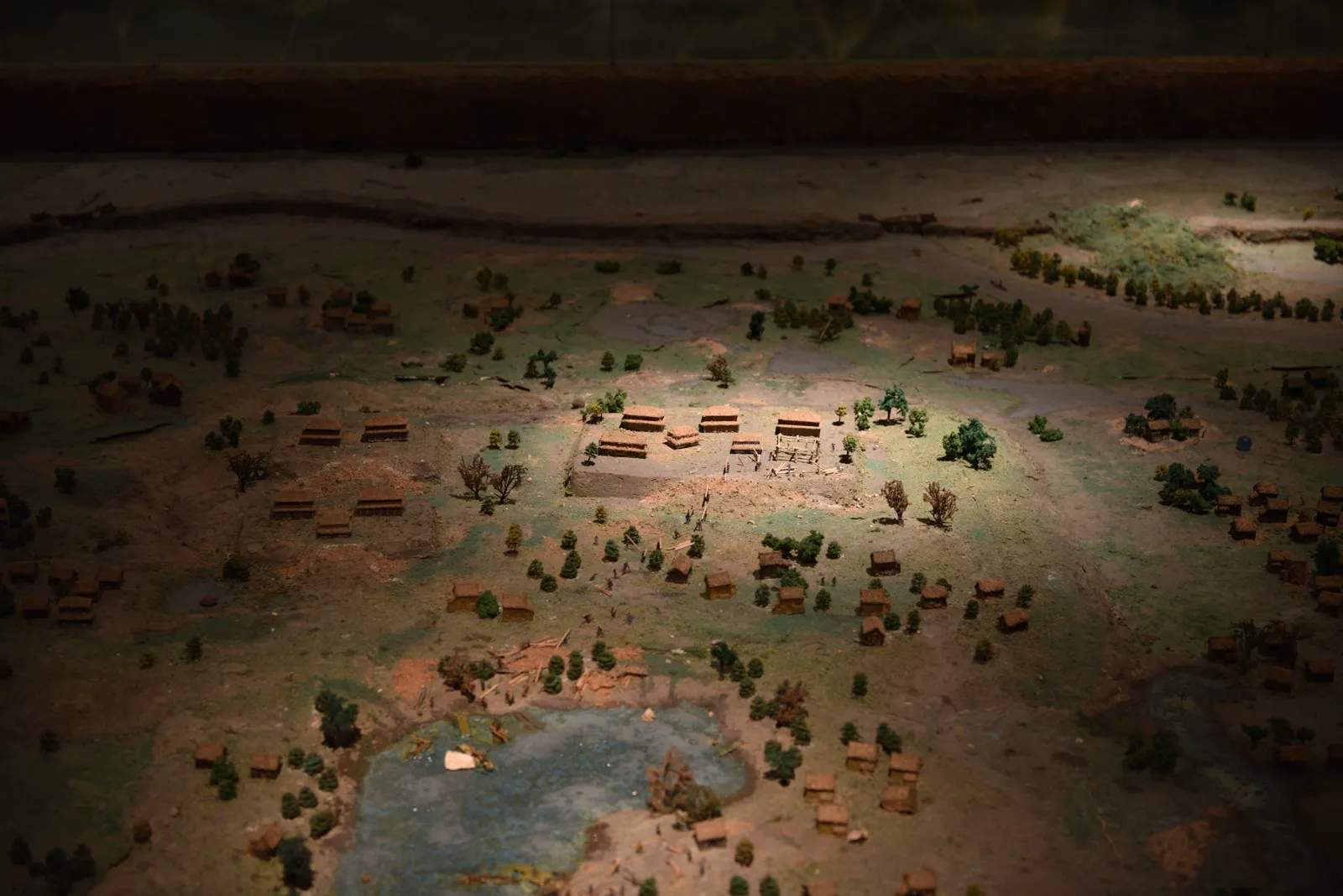
The World Heritage property has four named areas: the Area of Yaoshan Site, the Area of High-dam at the Mouth of the Valley, the Area of Low-dam on the Plain, and the Area of City Site. Together they preserve evidence of settlement planning, earth-built structures, water control and differences in social status expressed through burials.
At the park, use the interpretation to understand the spaces between surviving features. Archaeology often asks you to read traces in the ground rather than walk through complete buildings. Ask how the city was organised and why water management mattered to the surrounding rice-growing landscape.
At Liangzhu Museum, look closely at jade objects and the explanations of everyday life and the ancient city. Comparing their small-scale craftsmanship with the large-scale earthworks makes the visit more coherent. The museum is a place to understand the inscription; the archaeological areas are the World Heritage property itself.
Read the official UNESCO property record ↗
Related destinations
Journeys in connected destinations
Before you visit
How much time do I need?
Allow a full day from Hangzhou for the ruins park, museum, lunch and transfers. This gives each part enough time to make sense.
Can I visit from Shanghai as a day trip?
Yes, with an early train and a focused itinerary. Staying in Hangzhou makes a more relaxed visit, especially if you also want West Lake.
Will I see a standing ancient city?
You will see an archaeological landscape rather than complete ancient streets and buildings. Combine the park with the museum to understand the remains.
Is Liangzhu suitable for someone new to archaeology?
Yes. Start with a clear explanation of the city, water system and jade culture, then use those themes to guide your visit.
Use Plan Your Journey to tell us which places you would like to explore and how much time you have.